
Internship in Barcelona: the best neighbourhoods to live as an intern
Barcelona is one of the most popular internship destinations in Europe — and for good reason. The city combines a dynamic business scene with a Mediterranean rhythm, excellent public transport and a social scene that welcomes international students from day one. But Barcelona is large, diverse and completely different in character from one neighbourhood to the next. Where you live determines a significant part of how your internship experience feels — and how much you spend each month.
27-April-2026
Page content
Internship in Barcelona: the best neighbourhoods to live as an intern
In this article we walk you through the best neighbourhoods for interns in Barcelona, what to expect in terms of atmosphere, costs and transport links, and how to choose the area that best fits your situation. Whether you're looking for a buzzing nightlife scene around the corner, a quiet place to recharge after work or simply the best value for your budget — Barcelona has a neighbourhood for every intern.
Why your choice of neighbourhood matters
Your living environment shapes more than you might expect. A neighbourhood too far from your internship means commuting an hour each way every day. A neighbourhood that doesn't match your lifestyle means never really getting to know the city. And a neighbourhood outside your budget means eating pasta in the last week of the month when you'd rather be having patatas bravas.
Barcelona is divided into ten districts, each with multiple neighbourhoods. Most internship placements are located in the 22@ district (tech and innovation), the Eixample (international companies), the harbour area (marketing and tourism) or the historic centre. Choose your accommodation within a maximum of 30 minutes' commute from your workplace — with the metro that is almost always achievable.
Below we discuss the six most popular neighbourhoods among international interns in Barcelona — with an honest picture of the atmosphere, costs and pros and cons for each.
Gràcia — the charm of a village within a city
Gràcia is by far the most loved neighbourhood among international interns in Barcelona — and anyone who has lived there immediately understands why. It feels like a village: wide squares (plaças) where people sit outside until late, local cafés and restaurants that don't charge tourist prices, an engaged community feel and an atmosphere that is simultaneously artistic, international and authentically Barcelonese.
Gràcia sits directly above the Eixample and borders Parc Güell — Gaudí's iconic park that you can pop into on a Wednesday morning before work as if it's just around the corner. The neighbourhood is well connected via the L3 and L5 metro lines, and most internship placements in the 22@ district or the city centre are reachable within 20–30 minutes.
- Atmosphere: artistic, international, sociable, strong community feel
- Popular with: students in marketing, communications, creative industries and design
- Costs: €€
- Transport: ★★★★☆
- Rent (guideline): shared house €500–€700 / studio €800–€1,100 per month
- Best streets: Carrer de Verdi, Plaça del Sol, Carrer Gran de Gràcia
- Pros: excellent atmosphere, authentically Barcelonese, good metro connections, close to Parc Güell
- Cons: popular — good rooms go fast, act quickly
Eixample — international, central and professional
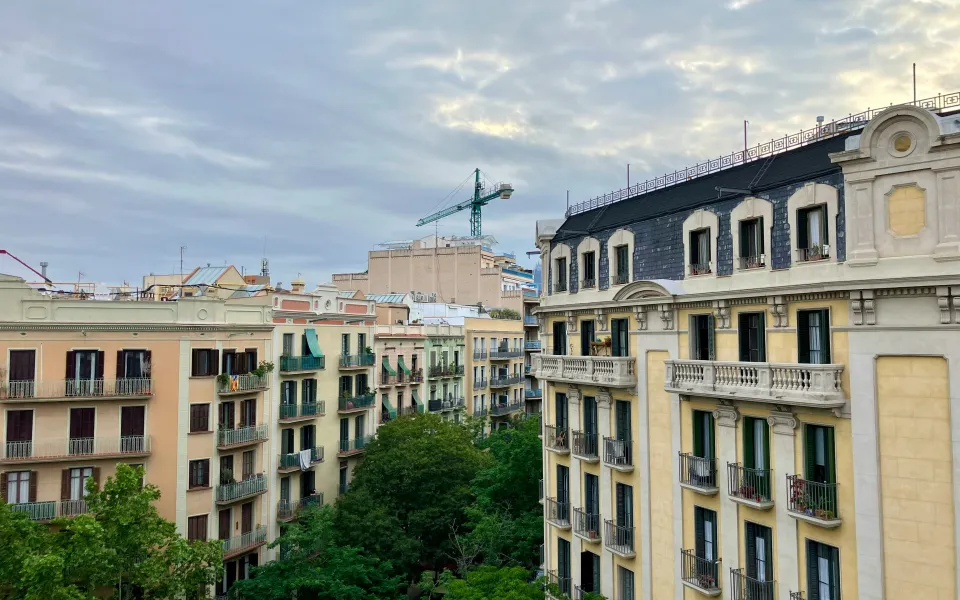
The Eixample is the heart of Barcelona's business district. Wide, straight boulevards with impressive modernist architecture, a high concentration of international companies, creative agencies and co-working spaces. If you're interning at a multinational or an international marketing firm, there's a real chance your workplace and your home could be in the same neighbourhood.
The Eixample is more expensive than Gràcia — but also more central. Almost every metro line stops here and everything in the city is quickly reachable. The neighbourhood is less cosy in the classic Barcelonese sense but offers a professional, international and lively streetscape.
The Eixample is split into two halves: Eixample Dreta (right side, more formal and expensive) and Eixample Esquerra (left side, younger and slightly more affordable). For interns, Esquerra is generally the better choice.
- Atmosphere: professional, international, central, modern
- Popular with: students in finance, marketing, IT and international relations
- Costs: €€€
- Transport: ★★★★★
- Rent (guideline): shared house €550–€800 / studio €900–€1,200 per month
- Best streets: Carrer del Consell de Cent, Carrer de Muntaner, Avinguda del Paral·lel
- Pros: central location, excellent public transport, close to many internship placements
- Cons: more expensive than other neighbourhoods, less local character
Poblenou — the tech intern's home base
If your internship is in the 22@ district — Barcelona's innovation and tech hub, home to companies like Amazon, HP, Glovo and hundreds of startups — then Poblenou is the most logical place to live. The neighbourhood sits directly next to the 22@ district and has been transformed over the past ten years from a former industrial area into one of the most dynamic and creative neighbourhoods in the city.
Poblenou has a unique character: wide streets, large apartments (former factory buildings), an active arts scene, excellent coffee spots and direct access to Barcelona's beach — literally within walking distance. The atmosphere is younger, more modern and more international than Gràcia, but far less touristy than the city centre.
- Atmosphere: creative, young, innovative, mix of tech and arts
- Popular with: students in IT, technology, design and e-commerce
- Costs: €€
- Transport: ★★★★☆
- Rent (guideline): shared house €500–€700 / studio €800–€1,100 per month
- Best streets: Rambla del Poblenou, Carrer de Pallars, Passeig del Taulat
- Pros: directly next to the 22@ district, affordable, beach around the corner
- Cons: slightly less connected to the city centre than Gràcia or Eixample
El Born / Sant Pere — historic, hip and central
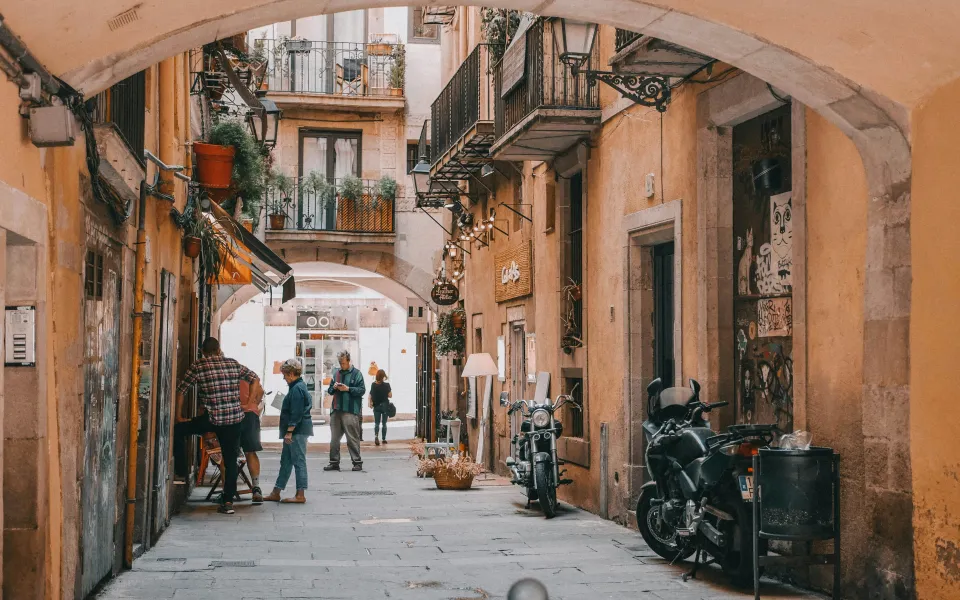
El Born is one of the most beautiful and photogenic neighbourhoods in Barcelona. Medieval alleyways, the imposing Santa Maria del Mar church, excellent restaurants and tapas bars, and a social scene that is international and local at the same time. El Born borders the historic centre (Barri Gòtic) and the harbour, and is well connected by metro and bus.
The neighbourhood is popular but expensive — especially for a studio apartment. For interns working in the city centre or at tourism and media companies, El Born is a particularly attractive option. Share an apartment here with three or four fellow interns and it becomes affordable and unforgettable.
- Atmosphere: historic, hip, cosmopolitan, lively
- Popular with: students in tourism, hospitality, media and communications
- Costs: €€€
- Transport: ★★★★★
- Rent (guideline): shared house €550–€750 / studio €950–€1,300 per month
- Best streets: Carrer del Comerç, Passeig del Born, Carrer dels Flassaders
- Pros: beautiful surroundings, central location, excellent nightlife
- Cons: touristy, expensive for independent accommodation
Sants — affordable, quiet and well connected
Sants is the most underrated neighbourhood for interns in Barcelona. Less well known among international students than Gràcia or El Born, but on almost every other measure equally good or better. Sants is affordable, quiet, authentically Barcelonese and has direct access to Barcelona-Sants train station — from where you can reach Madrid in two hours and the airport in thirty minutes.
The neighbourhood has a large Latin American and local Catalan community, excellent local markets, good supermarkets and a friendly neighbourhood feel without the noise of tourist-heavy areas. For interns who prioritise space, affordability and calm, Sants is an excellent choice.
- Atmosphere: quiet, affordable, authentic, local
- Popular with: students who want to keep costs down and value space
- Costs: €€
- Transport: ★★★★☆
- Rent (guideline): shared house €450–€650 / studio €750–€1,000 per month
- Best streets: Carrer de Sants, Plaça de Sants, Carrer de la Creu Coberta
- Pros: affordable, quiet, excellent train and metro connections
- Cons: less international, slightly further from the city centre
Sant Andreu — the hidden gem for budget-conscious interns
Sant Andreu is the least well known neighbourhood on this list — and therefore perhaps the most valuable tip. Located in the north of Barcelona, Sant Andreu is a genuine working-class neighbourhood with its own character, low rents and a community that operates entirely outside the tourist circuit. The neighbourhood has quietly undergone a revival in recent years and has become increasingly popular among creative professionals and young Barcelonans.
For interns who consciously choose a more authentic and affordable experience — and who are prepared to travel an extra metro stop — Sant Andreu is a serious option. The L1 metro connects the neighbourhood well with the city centre and the 22@ district.
- Atmosphere: authentic, local, quiet, affordable
- Popular with: students looking for maximum value for their budget
- Costs: €
- Transport: ★★★☆☆
- Rent (guideline): shared house €400–€600 / studio €650–€900 per month
- Best streets: Rambla del Poblenou, Plaça del Mercadal, Carrer de la Independència
- Pros: most affordable option on this list, fully authentic Barcelonese experience
- Cons: further from the centre, smaller international social network
Neighbourhood comparison: which area suits you?
Gràcia
- Atmosphere: sociable and artistic
- Costs: average
- Transport links: very good
- Best for: all fields of study
Eixample
- Atmosphere: professional and central
- Costs: expensive
- Transport links: excellent
- Best for: finance and marketing
Poblenou
- Atmosphere: creative and tech
- Costs: average
- Transport links: very good
- Best for: IT, tech and design
El Born
- Atmosphere: hip and historic
- Costs: expensive
- Transport links: excellent
- Best for: tourism and media
Sants
- Atmosphere: quiet and affordable
- Costs: budget-friendly
- Transport links: very good
- Best for: budget-conscious interns
Sant Andreu
- Atmosphere: authentic and local
- Costs: cheapest
- Transport links: good
- Best for: maximum savings
Practical tips for finding accommodation in Barcelona
Start after your internship is confirmed Only start looking for accommodation once you know where your internship is located. This way you avoid booking something too far from your workplace. Through Abroad Internships you receive an overview of available housing options from our fixed partners in Barcelona after your placement is confirmed — matched to your neighbourhood and budget.
Act fast The rental market in Barcelona is competitive — especially for good rooms in Gràcia, Eixample and El Born. A good room listed today is often gone tomorrow. Reacting quickly is not an exaggeration but a necessity.
Check your commute time Use Google Maps or the TMB app to check the journey time from the accommodation to your internship. Aim for a maximum of 30–40 minutes per trip — Barcelona's public transport system means this is achievable from virtually every neighbourhood.
Always ask for a written contract Never pay a deposit or first month's rent without a written rental contract. This applies to temporary rentals and rooms found via platforms like Idealista or Spotahome.
Factor in the NIE number If you stay in Spain for longer than three months you will need a NIE number — an identification number for foreigners. It is a straightforward application at the Spanish police station (€10–€20) but does take some time. Ask your partner or landlord for advice on the process.
Use the T-Casual for public transport A T-Casual (10 journeys, €12.15) is valid on the metro, bus and tram across Barcelona. Cheaper than individual tickets and the easiest way to get around the city.
Ready to start your internship in Barcelona?
Find out everything about an internship in Barcelona through Abroad Internships — from placement to accommodation and costs.
Wat is de beste wijk om te wonen als stagiair in Barcelona?
Gràcia is voor de meeste stagiairs de beste keuze — goede balans tussen sfeer, bereikbaarheid en prijs. Wie stage loopt in het 22@-district kiest beter voor Poblenou. Wie centraal wil wonen met een hoger budget kiest voor Eixample of El Born.
What is the best neighbourhood to live in as an intern in Barcelona?
Gràcia is the best choice for most interns — a good balance of atmosphere, transport links and price. Interns working in the 22@ district are better off in Poblenou. Those who want a central location with a higher budget should consider Eixample or El Born.
How much rent will I pay as an intern in Barcelona?
In a shared house you pay an average of €500–€700 per month in popular neighbourhoods like Gràcia and Poblenou. A studio apartment costs €800–€1,100. Eixample and El Born are slightly more expensive; Sants and Sant Andreu are cheaper.
How far should I live from my internship placement?
Aim for a maximum commute of 30–40 minutes by public transport. Barcelona has an excellent transport network — metro, tram and bus connect every neighbourhood quickly to the rest of the city.
When should I start looking for accommodation in Barcelona?
Only after your internship placement has been confirmed. This way you know which neighbourhood makes the most sense. Through Abroad Internships you receive an overview of available options from fixed partners after your acceptance.
Do I need a NIE number to rent in Barcelona?
Not always for short-term rentals, but for stays longer than three months it is advisable to apply for one. Some landlords require it. The application costs €10–€20 and is handled at the Spanish police station.
Is it safe to live in all neighbourhoods of Barcelona?
Barcelona is generally a safe city. In tourist-heavy areas like Las Ramblas and the Barri Gòtic, pickpocketing is something to be aware of. The neighbourhoods on this list — Gràcia, Eixample, Poblenou, El Born, Sants and Sant Andreu — are all safe for international interns.